AFRICAT UK UPDATES
STAY IN TOUCH WITH OUR BI-MONTHLY AFRICAT UK NEWSLETTER
Newsletter update: AfriCat UK is aiming to resume publication of its newsletter during 2026. We are still keen to talk to anyone interested in helping or taking over its production (current delivery mechanism is Mailchimp) we would just love to hear from you, please get in touch with janet@africat.co.uk
Supporting Namibian Lion Trust’s Lion Guards / Rangers
World Ranger Day 31st July celebrates the work of the Wildlife Rangers Worldwide.
AfriCat UK wishes to Salute the work of the Namibian Lion Trust’s Lion Guards/Rangers who continue their work in reducing Human – Wildlife Conflict, supporting hard pressed farmers and keeping lions safe from poaching, snares or retaliatory killing. There are many challenges faced by the Lion Guards on a daily basis. Walking through the bush to get from A to B carries many risks from for example sprained ankles, bites, heat stroke to more serious injuries. However, the work involved in collaring a lion, and when using non lethal methods to scare lions from kraals does carry much greater risk of serious injury or worse.
While every care is taken, injuries can and do occur which may incapacitate a Lion Guard for a time. With no statuary sick pay, health insurance is vital to support the lion guards and their families during periods of recuperation.
AfriCat UK is pleased this year to have been able to meet the costs of the Health Insurance for the Lion Guards.
Supporting Namibian Lion Trust's Lion Guards / Rangers
World Ranger Day 31st July celebrates the work of the Wildlife Rangers Worldwide.
AfriCat UK wishes to Salute the work of the Namibian Lion Trust’s Lion Guards/Rangers who continue their work in reducing Human – Wildlife Conflict, supporting hard pressed farmers and keeping lions safe from poaching, snares or retaliatory killing. There are many challenges faced by the Lion Guards on a daily basis. Walking through the bush to get from A to B carries many risks from for example sprained ankles, bites, heat stroke to more serious injuries. However, the work involved in collaring a lion, and when using non lethal methods to scare lions from kraals does carry much greater risk of serious injury or worse.
While every care is taken, injuries can and do occur which may incapacitate a Lion Guard for a time. With no statuary sick pay, health insurance is vital to support the lion guards and their families during periods of recuperation.
AfriCat UK is pleased this year to have been able to meet the costs of the Health Insurance for the Lion Guards.

In addition, funds have been provided to help with other insurance costs as things take a battering out in the bush. For example, AfriCat UK has made a donation which will hopefully meet the insurance, servicing, replacement tyres and petrol costs on the two vehicles for a year.
The collared lions’ movements are tracked via satellite data. With the Pride movements monitored the team know where the lions are at any given time. This means alerts can be sent to farmers letting them know, if lions are in their area to ensure cattle are kraaled.
The collected data is recorded for research and lion guards record information electronically. With radios and mobile phones to run as well, the small admin office has a demand for electricity. For a variety of reasons, it has been necessary to relocate the admin centre so AfriCat UK donated the funds for some solar panels and batteries which will ensure a supply of electricity – vital these days to power a range of technology so all this work can continue.
The AfriCat UK Board is considering other requests for funding and hopes to make further donations in the near future, watch this space.
World Lion Day 10th August 2026
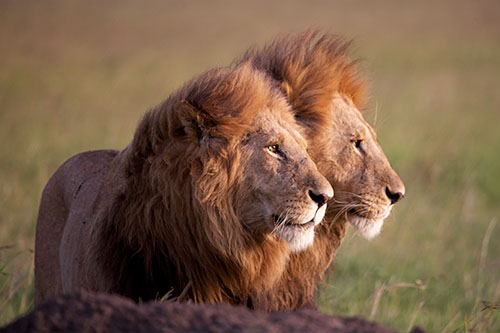
It is sad to say that Lion populations are continuing to struggle in sub-Saharan Africa. The reasons are familiar, human- wildlife conflict, retaliatory killings, poaching, trophy hunting, habitat loss and fragmentation, human and livestock population increases, snares, changes in weather patterns and impact of pollution.
A statistic that surprises many is that there are actually very similar numbers of lions to both black and white rhinos living wild in Africa. The number is thought to be around £24,000.
AfriCat UK is delighted to be able to join Blair Drummond Safari Park to help Celebrate World Lion Day at their special Big Cat Weekend on the 8th August. If you are in Scotland near Stirling than come along and say hello. Funds raised will be going to support the work of the Namibian Lion Trust.
AfriCat UK wants to thank the Education Team and Blair Drummond Safari Park for their help and support in raising awareness of the plight of lions in the Wild. An excellent day was had by all of us including the lions! The mid year reports for 2026 are available and can be found here.
Watch this video to see the work of the Lion Guards and how much your support is needed and valued.
Donate Now to support the Namibian Lion Trust


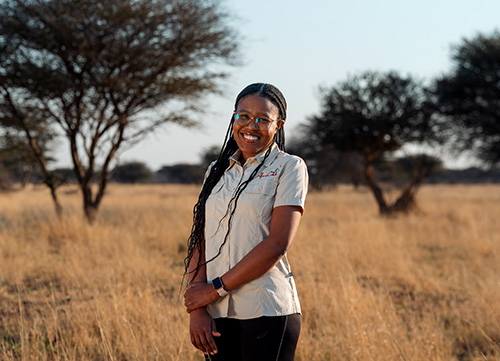
Introducing Heather UJ Nependa MSc, Research Ecologist and Science Communications Officer with the AfriCat Foundation at The Okonjima Nature Reserve.
Heather first visited Okonjima while in primary school as part of the AfriCat Foundation outreach education programme. The experience shaped her academic and professional trajectory, and she resolved to pursue a career in conservation with the aim of one day working for AfriCat.
She subsequently completed undergraduate and postgraduate degrees in Conservation Ecology and Entomology at the University of Stellenbosch. During her master’s research in 2018, she returned to Okonjima to undertake field sampling. In 2025 she rejoined on a part time basis and, from 2026, has been permanently employed at Okonjima Nature Reserve.
Her professional journey reflects the long-term value of conservation education initiatives. Support from AfriCat UK contributed to the outreach programme that first introduced her to Okonjima, demonstrating how sustained investment in environmental education can influence career pathways in conservation science.
Heather currently contributes to the AfriCat Pangolin Research Project and supports broader ecological research undertaken by the Foundation. She is also preparing an article provisionally titled “Decades of Return: Stories from Guests Who Have Walked with Okonjima and AfriCat for Over 10 Years”.
Chris Packham Tour
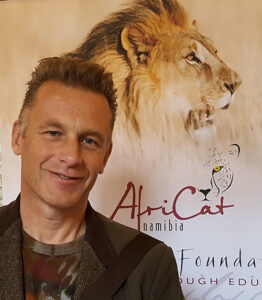
For AfriCat UK supporters in the UK our Patron Chris Packham is on tour with his new talk World of Wonder A plant on the Edge . Well worth exploring further!
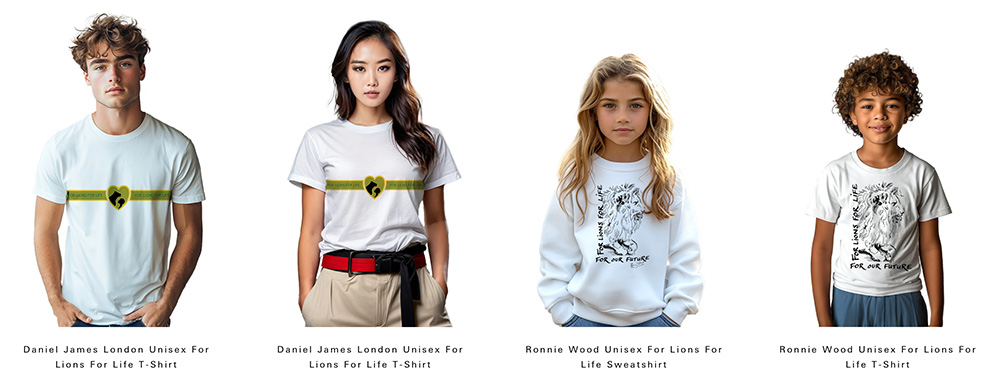
Namibian Lion Trust T-shirts designed by Leading London Fashion Designer, Daniel James
The Namibian Lion Trust are super-excited to announce a ground-breaking initiative in wildlife conservation.
Today we are launching a unique range of specialist designer clothing based on the fusion of the core values of Fashion, Rock ‘n’ Roll and Conservation, and designed from the outset in support of the Namibian Lion Trust.
Leading London Fashion Designer, Daniel James, has very kindly designed a unique range of clothing incorporating specialist features that combine style with practicality, functionality with flair.
All profits/proceeds come directly to us at the Namibian Lion Trust.
Namibian Lion Trust T-shirts designed by Leading London Fashion Designer, Daniel James
The Namibian Lion Trust are super-excited to announce a ground-breaking initiative in wildlife conservation.
Today we are launching a unique range of specialist designer clothing based on the fusion of the core values of Fashion, Rock ‘n’ Roll and Conservation, and designed from the outset in support of the Namibian Lion Trust.
Leading London Fashion Designer, Daniel James, has very kindly designed a unique range of clothing incorporating specialist features that combine style with practicality, functionality with flair.
All profits/proceeds come directly to us at the Namibian Lion Trust.
World Rhino Day is a day of awareness for all five rhino species and the work being done to save them by rhino experts and advocates around the world.
Okonjima Nature Reserve is home to a small number of White Rhino, which are a treat to see in their natural habitat. Those staying at Okonjima can arrange to visit them, in certain circumstances this may be on foot.
White Rhinos are struggling as they continue to be poached for their horn, which is nothing more than what your nails are made of. Really sadly some people still hold onto a belief that it has healing properties – it does not. As the horn has value on the black market these magnificent creatures are still slaughtered and worse still have their horns cut off with chain saws and then left to die.
One of Daniel’s many celebrity clients is Ronnie Woods of the Rolling Stones! Daniel designs all of Ronnie’s stage outfits and Ronnie has very kindly donated one of his specially-commissioned Lion artworks to be printed on a one-off T-shirt for our unique use. – All proceeds come directly to us at the Namibian Lion Trust.
Ronnie has been supporting conservation efforts for many years and we are very grateful for his support with this project.
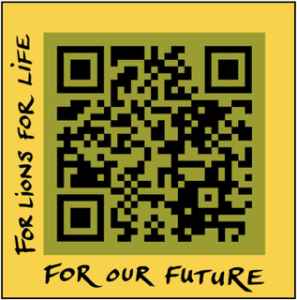
Please follow the link below to go directly to Daniels James’s website to see the whole collection he has designed alongside, as well as the very special Ronnie Woods Lion artwork T-shirt or use the QR code.
Shop now and support the work of the Namibian Lion Trust
For more information about The Namibian Lion Trust please visit their website.
Thank you from the AfriCat UK Board
We have been delighted to see the funds coming in from a range of sources.
The AfriCat UK online shop has increased its range of goods and includes mugs, cards water bottles as well as a range of other items. It is worth checking out from time to time as things do get added. If there is something particular you are after, do email janet@africat.co.uk with the detail of what you would like and it may be possible to design it for you. Please allow plenty of time.
The new Namibian Lion Trust merchandise from London Fashion Designer Daniel James has been well received and sales have been steady especially in the run up to Christmas. They do make excellent presents for all ages.

Easyfundraising continues to be popular and is an excellent way to help AfriCat UK without costing you a penny, please spread the word and if you have not signed up yet please do. The shop you purchase the goods from give us a small percentage of the time cost.
We have been delighted to see that people have been making donations via Benevity which is a corporate platform that enables people across the world to donate to charities of their choice.
We are very grateful to be remembered by a recent friend of AfriCat UK in their will and will ensure their generosity is used to good advantage.
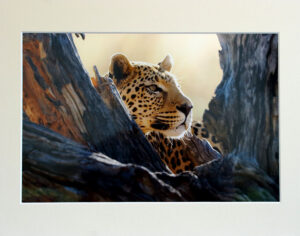
There is still a supply of prints taken by Chris Packham you can purchase.
Check out the details in the shop section of the website.
In 2025 we hope to expand and increase the ways people can support AfriCat UK and The Namibian Lion Trust. Any suggestions and ideas are most welcome.
AfriCat UK
The AfriCat UK Board.
The three current Trustees of AfriCat UK are Frank Horan as Chairman, Charlotte Shipton and Janet Widdows. In addition, we have keen supporters of the work in Namibia who assist the Board with various tasks and our longstanding Patrons and Ambassadors. The Board is keen to hear from anyone who would like to help with fundraising, tasks associated with running the charity or those willing to join the Board.
Any offers of help are most welcome, please contact either Frank or Janet or Charlotte
AfriCat UK’s Vision
To contribute towards the conservation efforts of the Namibian charities who work to conserve suitable habitat and environments where carnivores and endangered species can thrive and survive. This work will involve education, research and working with local communities.
Misson Statement
To promote the need for conservation of the natural world for all in Namibia. To work with local charities supporting their projects and initiatives. This will include but not be limited too, awareness raising of issues in the UK, Namibia and the wider world; supporting local educational initiatives; fundraising; promoting visits to the region and Okonjima; encouraging and sharing relevant research work; working to reduce human wildlife conflict and to involve local communities with all relevant activities.
Contacting AfriCat UK
correspondence address: 5 Brackendale Way, Reading, Berkshire RG6 1DZ
phone: landline 0118 935 1681 (please leave a message if no reply)
email address: support@africat.co.uk has replaced info-uk@africat.org but anything sent to the old email is being forwarded and we will reply.
AfriCat UK board members can be contacted with their first name followed by @africat.co.uk
website: www.africat.co.uk
AfriCat - Behind the Scenes
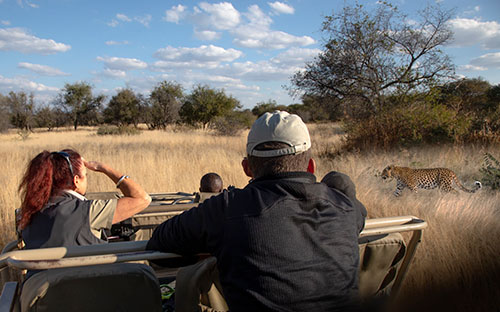
The AfriCat Foundation welcomes Okonjima guests to come behind the scenes to learn first-hand about the work of the Foundation.
The AfriCat Behind The Scenes programme is available for groups of guests between 4 to 8 pax booked into the Okonjima Bush Camp or Luxury Villa for at least three nights on a fully inclusive basis.
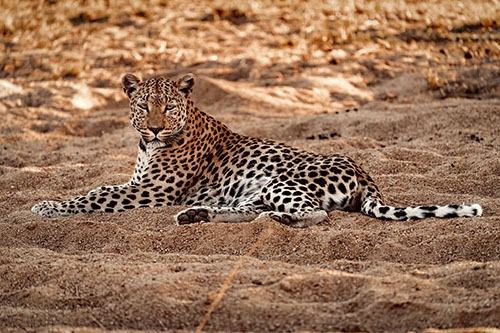
This experience will give you a deeper insight into our research projects, such as the Brown Hyaena, Pangolin, the Leopard and other endangered species. Guests will be able to see and participate in AfriCat work that can be scheduled for the time of the visit such as re-collaring as well as the option of meeting the “AfriCat ambassador carnivores” that are in the care of AfriCat.
For more information please visit: AfriCat Behind the Scenes
Since 2014, AfriCat UK (UK Charity Commission Number 1120026) has supported The AfriCat Foundation and The Namibian Lion Trust (Formerly AfriCat North). AfriCat UK raises funds for the various programs that have been developed by the Namibian charities to assist in research of key species, research of solutions to Human Wildlife Conflict, and the education of local communities in Namibia.
We have successfully funded research that has assisted in the better understanding of the Cheetah, Pangolin, Leopard, Lion, and Hyenas. AfriCat UK have funded the building of a school for local communities to improve the link in conservation and education for future generations. Many world renowned veterinary clinicians have based their research and resultant doctorates on the animals and facilities that can be found at the two charities in Namibia that we continue to fund. The importance of this research allows for wide-spread conservation initiatives that impact species globally.